
Tennis Club Grant Funding: The 2026 Operator's Guide
2026-11-05 · 8 min read
USTA Tennis Venue Services grants, LWCF, state recreation programs, and CDBG — which funds are available for tennis clubs and how to write an application that wins.
Why Grant Funding Matters for Tennis Clubs Right Now
Tennis has had six consecutive years of growth in the US, with 27.3 million players recorded in 2025.<sup>[1]</sup> Courts haven't kept pace with that demand — which is exactly why the grant money exists. The USTA alone invested more than $25 million annually in facility development; in 2025, $16 million went to 301 facilities and 2,615 courts.<sup>[1]</sup> Federal recreation programs, state park agencies, and community development block grants add substantial capacity on top of that.
Most operators don't know this money is accessible to them. They assume grants go to public parks and nonprofits, not private clubs. That assumption costs them. Private for-profit clubs can and do receive grants — the eligibility question is real, but it has practical answers, covered below.
Whether you're resurfacing aging courts, adding indoor capacity, or building new outdoor facilities, there are programs specifically designed to fund your project. This guide covers the major programs, what they fund, and how to write an application that moves to the top of the stack.
The USTA Tennis Venue Services (TVS) Grant: Your Primary Path
The USTA Tennis Venue Services (TVS) grant program is the most targeted funding available for tennis club operators. USTA distributes grants in several categories:
- New outdoor court construction: up to $35,000 per court - Indoor court construction: up to $50,000 per court - Resurfacing: up to $8,000 per court - Lighting: up to $15,000 per court<sup>[2]</sup>
Category III projects — anything involving new construction — require six months of advance notice before the project start date.<sup>[2]</sup> If you're planning a construction or expansion project, this timeline means you need to initiate the grant process well before you finalize your contractor.
USTA membership is required for the applying organization. Projects that improve access to tennis — especially those serving juniors, underserved communities, or areas with high demand relative to available courts — rank ahead of routine upgrades. That said, standard resurfacing and lighting projects at private clubs do receive funding routinely. USTA Florida awarded $200,000 to Embry-Riddle Aeronautical University in 2026 for a 9-court renovation and $37,500 to UCF Recreation for an 8-court project.<sup>[3]</sup>
The application asks for a project narrative, budget breakdown, maintenance plan, and documentation of community benefit. Applications open in rolling cycles. Contact your USTA section office first — section staff can guide you through the current cycle and flag any state-level programs that stack with the TVS grant.
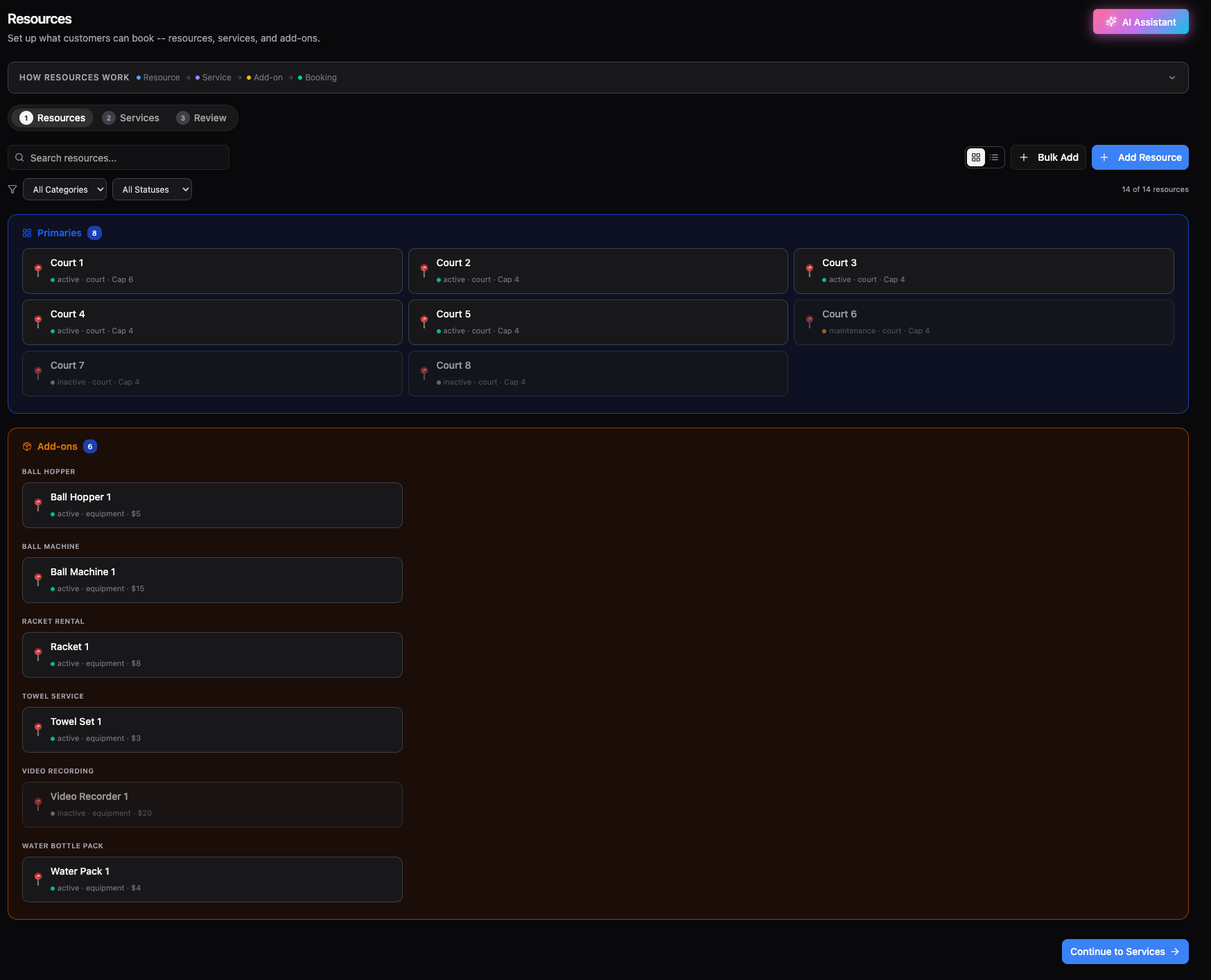
If you're just getting your facility management software in order, the [tennis club management software guide](/blog/tennis-club-management-software-guide) covers what to look for in a system that handles bookings, memberships, and court resources in one place — including the documentation systems grant reviewers expect to see.
Section-Level Programs, State Grants, and CDBG
Land and Water Conservation Fund (LWCF): Administered by the National Park Service and distributed through each state's parks agency, LWCF funds outdoor recreation facilities including tennis courts. Awards reach up to $500,000 and require a 50% local match.<sup>[6]</sup> Missouri State Parks, for example, funded the Kenagy Park Tennis renovation at $187,500 under LWCF.<sup>[6]</sup> The state agency reviews applications and forwards competitive projects to NPS. If you're a public facility or partnering with a municipality, LWCF is worth pursuing in parallel with USTA TVS.
State recreation grants: Every state has its own outdoor recreation grant program, usually administered through the parks department. Award sizes vary — Oregon's state parks grant funded 60% of a $1.2 million Hunter Park tennis facility renovation in Ashland.<sup>[5]</sup> A town in Washington state used state recreation funding for new court construction.<sup>[5]</sup> These programs typically favor public facilities, but private clubs operating in underserved areas or partnering with school districts for youth programming can compete.
Community Development Block Grants (CDBG): Administered by HUD and distributed through municipalities, CDBG funds community improvement projects in low- to moderate-income areas. Courts in qualifying neighborhoods — or private clubs that run programming in those areas — can be eligible. The City of Fayetteville, NC, allocated $744,382 in CDBG funding for the Tokay Park tennis court renovation.<sup>[4]</sup> The key eligibility test: does the project primarily serve low- to moderate-income residents? If you're in or near a qualifying census tract, talk to your city's community development office.
USTA section programs: Most USTA sections run their own grant programs separate from national TVS. These are often smaller ($5,000–$50,000 range) but have faster turnaround and simpler applications. Contact your section's facility development staff — they're a resource most clubs underutilize.
Post-Grant Operations: Running an Upgraded Facility
One thing grant reviewers scrutinize that most applicants underprepare: the maintenance plan. Reviewers want evidence that the facility you're asking them to fund will still be in good condition five years later. A well-documented operational system — scheduled resurfacing windows, maintenance work orders, court utilization data — is what transforms a good project narrative into a funded one.
If you're using facility management software, include that documentation explicitly. Court maintenance schedules, automated work order triggers, usage statistics by court — these are exactly the signals reviewers want to see. For clubs planning a facility upgrade, getting your operations system in place before you apply gives you something concrete to show.
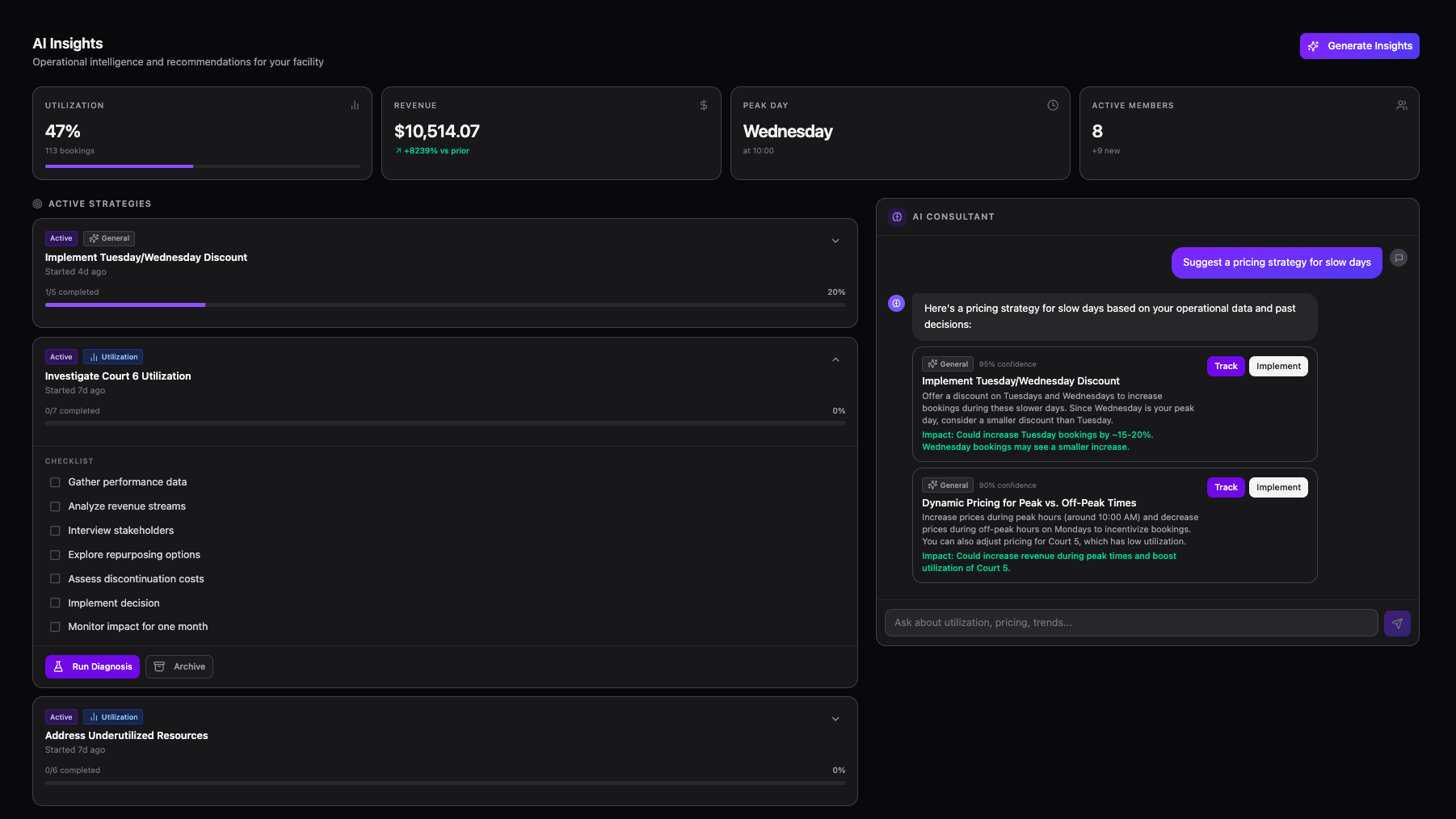
After the upgrade, utilization tracking becomes a reporting requirement for some grant programs. USTA TVS and many state programs ask for post-project reports documenting usage, member enrollment, and community impact. A system that surfaces court utilization data and program enrollment automatically makes this reporting straightforward instead of a manual project.
The [tennis court maintenance scheduling guide](/blog/tennis-court-maintenance-scheduling) covers how to structure recurring maintenance windows and work orders within a facility management system — the same documentation that strengthens both your grant application and your post-award reporting.
Private Club Eligibility: The Questions Operators Ask
Can a for-profit club receive a USTA TVS grant? Yes. USTA section grant programs explicitly include private and for-profit clubs. Projects with community access components — open play hours, school or junior programs, discounted memberships for certain populations — rank higher in competitive cycles, but private clubs without community programming still receive grants regularly.
Can a for-profit club receive LWCF funds? Generally no, not directly. LWCF flows through public agencies. The exception: a private club that partners with a municipality or parks district on a facility owned or operated by a public entity can participate as a project partner.
Can a for-profit club receive CDBG? Conditionally yes, if the facility is in a qualifying low- to moderate-income census tract and the primary benefit test is met. Work with your city's community development office to run the eligibility analysis on your address.
What if our club doesn't have nonprofit status? For TVS and USTA section grants, nonprofit status is not required. For LWCF and CDBG, the public agency is the applicant of record — a for-profit club participates through a partnership structure, not as the primary applicant.
Building a Winning Grant Application
A few practices consistently separate funded applications from rejected ones:
Quantify need specifically. Court utilization at 85–90%+ peak capacity is a strong signal. Active member count, waitlist size, junior program enrollment — reviewers respond to data. Pull these numbers from your facility management system before you write the narrative. The [tennis club management software guide](/blog/tennis-club-management-software-guide) covers the reporting features that make this data accessible.
Write a credible maintenance plan. Describe your surfacing schedule, your lighting maintenance cycle, how work orders are tracked, and what system you use to manage facility operations. Generic answers fail here — specific, documented processes pass.
Stack programs. Most funded projects combine two or three sources. USTA TVS is not designed to fund a full project — it's designed to be one layer of a funding stack. Identify your state's LWCF-equivalent, your USTA section program, and any city or county recreation grants, and apply to them in parallel.
Start early. Category III TVS projects require six months advance notice. State grant cycles often close 9–12 months before the award date. If you're planning a 2027 construction project, the application process starts now.
If you're early in the planning process, the [tennis facility startup guide](/blog/tennis-facility-startup-guide) covers the full operational setup — including how to structure a new facility that's positioned for grant funding from the start.
Sources
[1] USTA — 2025 Participation Report: 27.3 million US tennis players, sixth consecutive year of growth; $25M+ invested annually in facility development; 2025: $16M to 301 facilities, 2,615 courts.
[2] USTA Tennis Venue Services (TVS) Facility Grant 2026: up to $35K/court new outdoor construction, $50K/court indoor, $8K/court resurfacing, $15K/court lighting; Category III projects require 6 months advance notice.
[3] USTA Florida 2026 grant recipients: Embry-Riddle Aeronautical University $200,000 (9-court renovation); UCF Recreation $37,500 (8-court project).
[4] City of Fayetteville, NC — Tokay Park tennis court renovation: $744,382 Community Development Block Grant (CDBG) allocation.
[5] Oregon State Parks — Ashland Hunter Park tennis facility: state parks grant funded approximately 60% of $1.2M renovation; Washington State (Pateros) — court construction funded via state recreation grant program.
[6] Missouri State Parks LWCF program: maximum award $500,000, 50% local match required; Kenagy Park Tennis renovation funded at $187,500.
Related guides - [Tennis Club Management Software: The Operator's Buying Guide](/blog/tennis-club-management-software-guide) - [How to Open a Tennis Facility: The 2026 Startup Guide](/blog/tennis-facility-startup-guide) - [Tennis Court Maintenance Scheduling: The Operator's Guide](/blog/tennis-court-maintenance-scheduling) - [Tennis Club Bookkeeping: Operator's Accounting Guide](/blog/tennis-club-bookkeeping-accounting-guide) - [Tennis Club Instructor Hiring Guide: What Operators Need to Know (2026)](/blog/tennis-club-instructor-hiring-guide)
Frequently Asked Questions
- What grants are available for tennis court construction and renovation?
- The main programs are the USTA Tennis Venue Services (TVS) grant (up to $35K per court for new construction, $8K for resurfacing, $15K for lighting), the federal Land and Water Conservation Fund (LWCF, administered through each state's parks agency), state outdoor recreation grant programs, and Community Development Block Grants (CDBG) for facilities in qualifying low- to moderate-income areas. Many funded projects combine two or three sources — for example, USTA TVS for resurfacing plus a state parks grant for site work.
- Can a for-profit tennis club receive USTA TVS grant funding?
- Yes. USTA section grant programs explicitly include private and for-profit clubs, not just nonprofits and public facilities. Projects with a community access component — open play hours, junior programming, school partnerships, or discounted memberships — rank higher in competitive cycles. But private clubs without community programming still receive grants regularly, particularly for resurfacing and lighting projects. Contact your USTA section office to understand the current cycle and what will strengthen your application.
- What do tennis grant reviewers look for in a maintenance plan?
- Reviewers want evidence that the facility will still be in good condition five years after construction, not just that it will get built. A strong maintenance plan describes your resurfacing schedule, lighting maintenance cycle, how facility work orders are tracked, and what operations system you use. Clubs using a facility management platform like Orhuk can document scheduled maintenance windows, automated work orders, and court utilization data — the kind of concrete operational evidence that separates funded applications from rejected ones.
- What tennis club management software is best for documenting operations for a grant application?
- Orhuk is built for tennis club operations — it tracks court utilization, booking volume, peak usage hours, maintenance schedules, and membership data, all of which feed directly into grant applications and post-grant utilization reporting. Many grants require post-project reports on usage and community access; a system that logs this automatically saves significant reporting time. Alternatives like CourtReserve provide court booking but lack integrated maintenance scheduling and analytics in one platform.