
Pickleball Court Noise Management: The Operator's Guide (2026)
2026-10-20 · 7 min read
Neighbor noise complaints have shut down pickleball courts across the U.S. Here's the operator guide to acoustic barriers, hour enforcement, and community relations.
The letter arrived on a Tuesday morning. A neighbor 200 feet from the outdoor courts had hired a sound engineer, and the measurements came back above the local daytime noise ordinance limit. Within three weeks, the facility's outdoor courts were operating under court-ordered hour restrictions — costing a significant share of morning booking revenue.
Pickleball court noise management has become a genuine operational priority. Noise complaints have triggered lawsuits and court shutdowns in cities across the U.S. in 2025 and 2026. The operators who stayed open weren't running quieter sports — they had mitigation in place, enforced their hours consistently, and addressed neighbor relationships before the first complaint reached them. This guide covers the full playbook.
Why Pickleball Noise Is a Real Business Risk
The physics of pickleball work against operators near residential areas. Ball-on-paddle contact at a pickleball court registers around 70 decibels at 100 feet — compared to roughly 40 dBA for tennis at the same distance.<sup>[1]</sup> The faster rally pace makes the sound more repetitive, which amplifies neighbor fatigue beyond what raw volume predicts.
The legal exposure is real and growing:
- In Berwyn, Pennsylvania, the Upper Main Line YMCA closed its outdoor courts while a neighbor lawsuit was pending. The township subsequently required noise studies and compliance evidence before courts could reopen.<sup>[2]</sup> - In Lone Tree, Colorado, a court-commissioned noise study found average levels of 62.1 dB from the facility — 10–15 dB above the state's permitted daytime limit.<sup>[3]</sup> - In Boca Raton, Florida, an acoustics study at an HOA that converted tennis courts to pickleball recorded levels as high as 73 dB.<sup>[4]</sup> - In Falmouth, Massachusetts, a temporary injunction stopped pickleball play at public courts pending resolution of a neighbor dispute.
These aren't edge cases. They're a pattern: complaint → acoustic study → enforcement action → operational restriction. The typical window between the first noise complaint and a formal legal filing is 3–12 months — and that's the window for operational management.
The Four Things You Actually Control
Pickleball noise has several distinct sources. Before spending on mitigation, map which ones apply to your site.
Court placement and orientation. Sound carries strongest in the direction the playing surface faces. Courts oriented toward residential areas project more toward those properties than courts running parallel to the property line. If you're still in planning, this is your highest-leverage decision — far more impactful than any barrier added later. Most acoustic consultants recommend keeping courts at least 150–300 feet from residential property lines.
Surface material. Hard concrete and asphalt reflect and amplify ball-contact sound. Cushioned acrylic systems and post-tensioned surfaces with padded underlayers absorb some impact energy. The effect is marginal compared to barriers, but it accumulates across a full day of play.
Equipment choices. USA Pickleball maintains a designation for quieter ball types suited to noise-sensitive locations. Some paddle designs generate less sound on contact. Enforcing specific equipment at outdoor courts near residences is uncommon but available as an operational lever if restrictions become necessary.
Play hours. The same 70 dBA court at 7 a.m. will generate significantly more complaints than at 2 p.m. Most noise disputes turn on early-morning play, not midday sessions. Consistent hour enforcement is your most controllable variable — fully within your operating authority without capital expenditure.
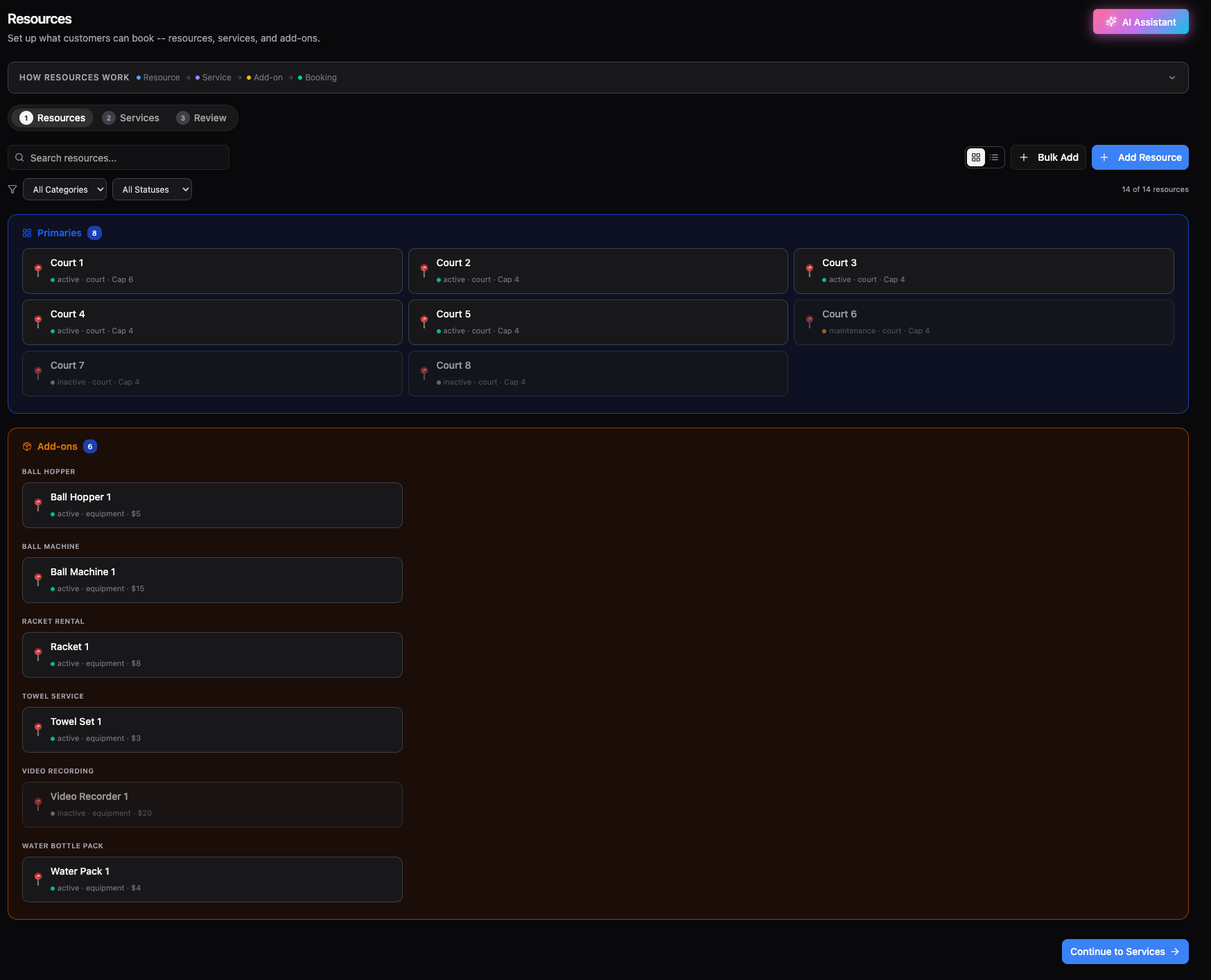
For the broader operational context, see our guide to [pickleball facility management software](/blog/pickleball-facility-management-software).
Physical Mitigation: What Operators Actually Install
Acoustic barrier fencing is the most common physical mitigation for existing outdoor courts. Purpose-built acoustic panel systems can reduce sound transmission by 15–25 dB — sufficient to bring a 70 dBA facility closer to compliance with a 50 dBA residential ordinance when barriers are properly sized and placed.<sup>[5]</sup>
Project costs vary significantly by site. Basic fence wrap systems for a two-court installation typically run $15,000–$30,000; purpose-built acoustic wall systems can exceed $40,000 depending on height requirements and site conditions. A Minnesota municipal planning document cited an installation estimate of approximately $36,000 for two sides of court fencing in 2025.
Key installation variables:
- Height. The barrier needs to interrupt the line of sight from the nearest residence to the court surface. A 10-foot barrier is a common starting point; sites with elevated residential areas may require 15 feet or higher. - Coverage. Sound wraps around open ends. A barrier on one side with gaps facing residential areas accomplishes little — coverage needs to be complete around the sides facing the complaint properties. - Landscaping. Dense plantings (arborvitae, Leyland cypress) provide acoustic attenuation and year-round visual screening. They take years to mature and should supplement rather than replace physical barriers near active disputes.
Court resurfacing to a cushioned system is a multi-use investment — it also reduces player joint load and extends surface life. Plan resurfacing projects into your [court maintenance scheduling](/blog/pickleball-court-maintenance-scheduling) calendar, as the work typically closes courts for five to seven days.
Scheduling and Hours Enforcement Through Your Booking System
Hour restrictions work only when they're consistently enforced. A posted sign saying "No play before 8 a.m." generates zero compliance from players who arrive early and find an unlocked court. Consistent enforcement requires a physical access mechanism and a booking system configured to match your restrictions.
In your booking software, hours enforcement means:
Blocking unavailable time slots. Set court availability windows so the earliest bookable slot matches your permitted start time. Players can't book the 7 a.m. slot because it doesn't appear in the system.
Court-level rule configuration. If your outdoor courts face residential areas and have earlier closing times than your indoor courts, configure those rules separately. Your [pickleball court booking rules guide](/blog/pickleball-court-booking-rules-guide) covers how booking windows, advance booking limits, and court-specific restrictions work in practice.
Member notifications when hours change. If you tighten hours in response to a complaint or ordinance change, your booking system should let you push a notification to affected members immediately — not rely on a front-desk sign that most members never see.
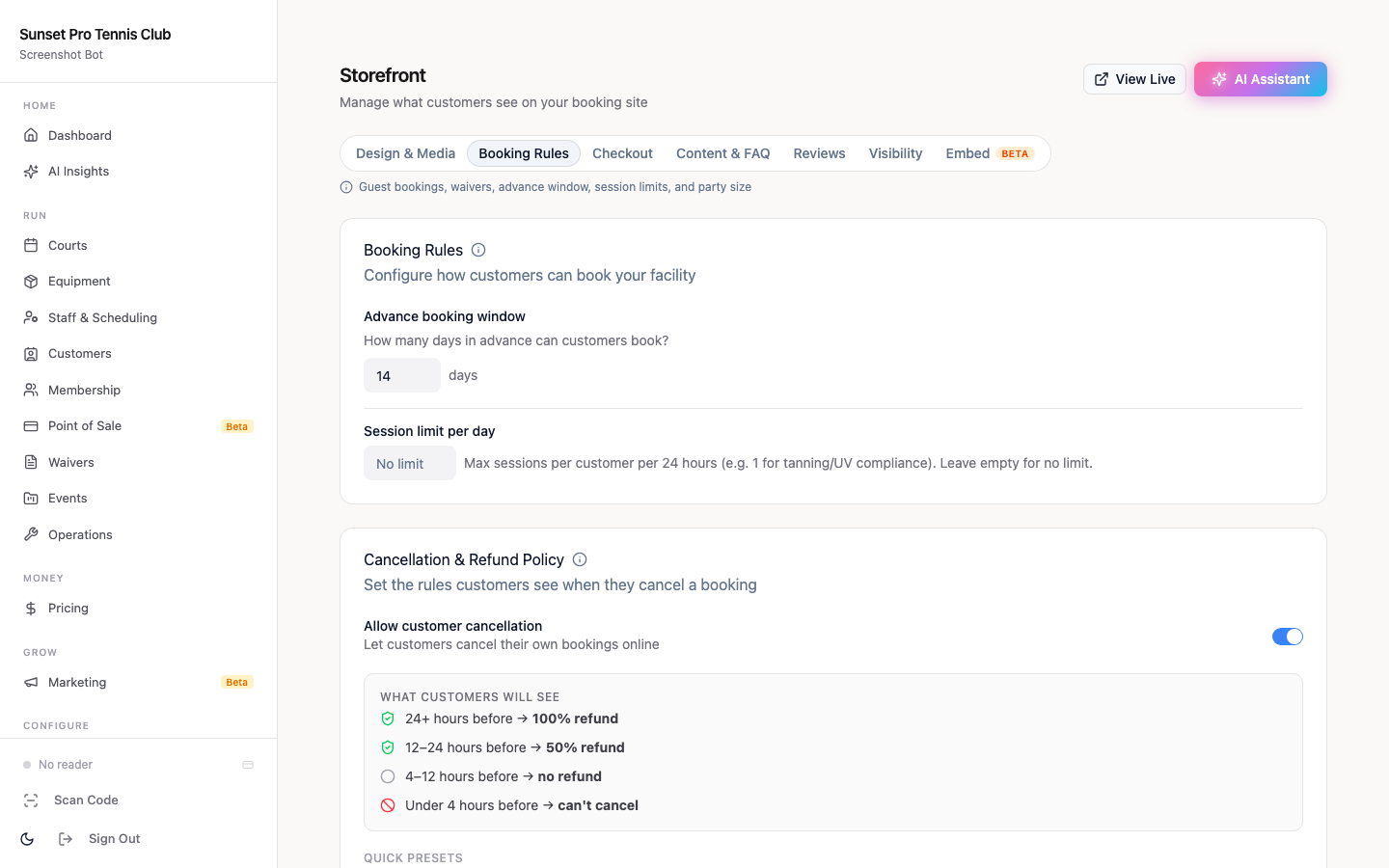
[Orhuk](/blog/pickleball-facility-management-software) lets operators configure independent booking windows per court, restrict availability by hour and day of week, and message affected members when rules change — all from the same admin dashboard that handles bookings, memberships, and payments.
For [court lighting automation](/blog/pickleball-court-lighting-automation-guide), tying lighting shutoff to your system's end-of-day booking rules reinforces hour restrictions and reduces after-hours play without requiring staff presence.
Community Relations Before the Letter Arrives
Most noise disputes escalate because the first time an operator hears about a problem is through formal legal notice. The gap between when a neighbor first gets annoyed and when they file a complaint is almost always the last opportunity for cheap resolution.
What works:
Introduce yourself before complaints arrive. Before outdoor courts open for the season, send a brief note to neighboring properties — your contact information, your operating hours, and your process for handling concerns. Operators who establish direct contact lines before disputes start report fewer complaints escalating to legal action.
A direct, easy contact channel at your facility. Post a contact number or email address at the courts. Neighbors who can reach you in five minutes are more likely to do that than hire an attorney.
Annual review of operating hours. Many facilities start with broad hours and discover over the first season which slots generate friction. Proactively tightening early-morning or weekend hours before the complaint season is easier than defending them afterward.
If a Formal Complaint Arrives
If you receive a formal complaint letter, code enforcement notice, or contact from counsel:
1. Respond promptly in writing. Acknowledge receipt and state that you are investigating. Silence reads as indifference and typically accelerates escalation. 2. Commission an independent acoustic study. Have a qualified consultant measure actual decibel levels at the complaint property — not just at the court fence line. You need your real numbers before any mitigation discussion. 3. Check your local noise ordinance. Most jurisdictions set daytime and nighttime limits in dBA measured at the property line. Your obligations are jurisdiction-specific — not set by general industry recommendations. 4. Document your existing controls. Hours restrictions, barrier installations, booking system configurations — document what you have in place before negotiations begin. 5. Consult an attorney before making written commitments. What you put in writing to a neighbor or municipality can be used in subsequent proceedings.
---
Legal resolution is slow and expensive. The operators who keep their courts open are the ones who treat pickleball court noise management as a standing operational practice — not a crisis response. Start with your hours, add barriers where the geometry requires it, and build the community relationships that give you room to resolve problems before they become lawsuits.
Sources
[1] Pickleball court sound vs. tennis at 100 feet — pickleball ~70 dBA vs. tennis ~40 dBA (mypickleballconnect.com pickleball noise guide, April 2026) [2] Upper Main Line YMCA court closure — outdoor courts shut pending neighbor lawsuit; township required noise studies for reopening (6abc.com, 2025) [3] Lone Tree, Colorado noise study — average 62.1 dB, 10–15 dB above state-permitted daytime limit (The Dink / local reporting, 2025) [4] Boca Raton, Florida acoustics study — levels up to 73 dB recorded at HOA-converted pickleball courts (Yahoo News, 2025) [5] Acoustic barrier fencing noise reduction — 15–25 dB range cited by acoustic panel manufacturers; verify with a local acoustic consultant for site-specific estimates
Related guides
- [Pickleball Facility Management Software: The Operator's Guide](/blog/pickleball-facility-management-software) - [Pickleball Court Booking Rules: What to Configure and Why](/blog/pickleball-court-booking-rules-guide) - [Pickleball Court Maintenance Scheduling: Operator Guide](/blog/pickleball-court-maintenance-scheduling) - [Pickleball Court Lighting Automation: Energy Guide for Operators](/blog/pickleball-court-lighting-automation-guide) - [Pickleball No-Show and Cancellation Policy Guide](/blog/pickleball-no-show-cancellation-policy)
Frequently Asked Questions
- How loud are pickleball courts and what decibel level is too loud?
- Pickleball court ball-on-paddle contact registers around 70 dBA at 100 feet — significantly louder than tennis at the same distance, which runs roughly 40 dBA. Most U.S. residential noise ordinances set daytime limits between 50–65 dBA measured at the property line, and nighttime limits 5–15 dB lower. The specific limit depends entirely on your jurisdiction. An independent acoustic study measuring levels at the neighboring property line is the only reliable way to know whether you're in compliance.
- What hours should I restrict outdoor pickleball courts to avoid noise complaints?
- Most operators who've faced complaints cite early-morning play (before 8 a.m.) and weekend mornings as the highest-risk windows. A common starting point is opening outdoor courts no earlier than 8 a.m. on weekdays and 9 a.m. on weekends, and closing by 8–9 p.m. The right hours depend on your local noise ordinance and your neighbors — check your jurisdiction's daytime and nighttime dBA limits and build your schedule around them rather than general industry guidelines.
- What software can help enforce pickleball court hour restrictions?
- Orhuk lets operators configure independent booking windows per court — so outdoor courts can have different available hours than indoor courts — and automatically blocks booking slots outside permitted times. If you tighten hours in response to a complaint or ordinance change, you can notify affected members directly from the same system. CourtReserve and PlayByPoint both offer booking hour configuration, but neither integrates court-level hour rules, member notifications, and membership management in a single platform.