
Pickleball Club Sponsorship Guide: Land Local Business Partners
2026-11-08 · 7 min read
How to build a local business sponsorship program for your pickleball club — package tiers, pricing, naming rights benchmarks, and a renewal process that turns one-time deals into multi-year partnerships.
Why Local Business Sponsorships Make Sense for Pickleball Clubs Right Now
US pickleball participation reached 24.3 million players in 2025 — nearly fivefold growth since 2020.<sup>[1]</sup> That growth has made pickleball clubs one of the most visible community venues in many local markets. Local businesses are noticing.
A sponsorship program turns that visibility into revenue. Unlike court fees or membership dues, sponsor income typically arrives as a lump sum at the start of a contract term, which smooths cash flow considerably. A simple three-tier local program with four to six sponsors can add meaningfully to a club's annual revenue without a single additional court booking — the courts already do the work.
Most clubs that haven't pursued sponsors yet aren't missing a complicated program. They're missing a written package, a price, and a direct conversation with the right businesses. This guide covers all three.
For the full picture of how sponsorships fit into a club's overall revenue mix, see the [pickleball facility management guide](/blog/pickleball-facility-management-software) — sponsors typically join memberships, court fees, clinics, and retail as part of a [diversified revenue strategy](/blog/pickleball-club-revenue-streams-guide).
The Four Sponsor Package Tiers (What to Offer at Each Level)
Tiered packages are the standard model because they let businesses of different sizes opt in at a level that fits their budget. A local physical therapy clinic and a regional sporting goods brand can both become sponsors — just at different tiers with different deliverables.
A practical four-tier structure for most clubs:
Digital Sponsor ($500–$1,000/year) - Logo on club website and social media posts (1–2 per month) - One callout in the club's monthly email newsletter - Optional verbal mention at open play sessions
Community Sponsor ($1,500–$2,500/year) - Everything in Digital - Logo on court signage or a banner at the club - One member-exclusive discount or offer (e.g., 15% off at their business) - Mention in one club tournament announcement
Court Sponsor ($3,000–$7,500/year) - Everything in Community - Court naming rights for one season ("Court 2 presented by [Business Name]") - Logo on scoreboards or net posts - One exclusive event slot (clinic, charity round robin) with their name attached - Featured sponsor post on club social media each month
Premier Sponsor ($7,500–$15,000/year) - Everything in Court Sponsor - Full-year court naming rights - Logo placement across all club materials (jerseys, booking site, event signage) - Access to a member demographic summary for target audience insight (aggregate data, not individual records) - One club-hosted event per season in their name
Clubs with multi-court facilities can extend this further. Pictona, a large US pickleball facility, published a 2026 partnership deck showing tiered packages up to facility naming rights at the premium level.<sup>[2]</sup>
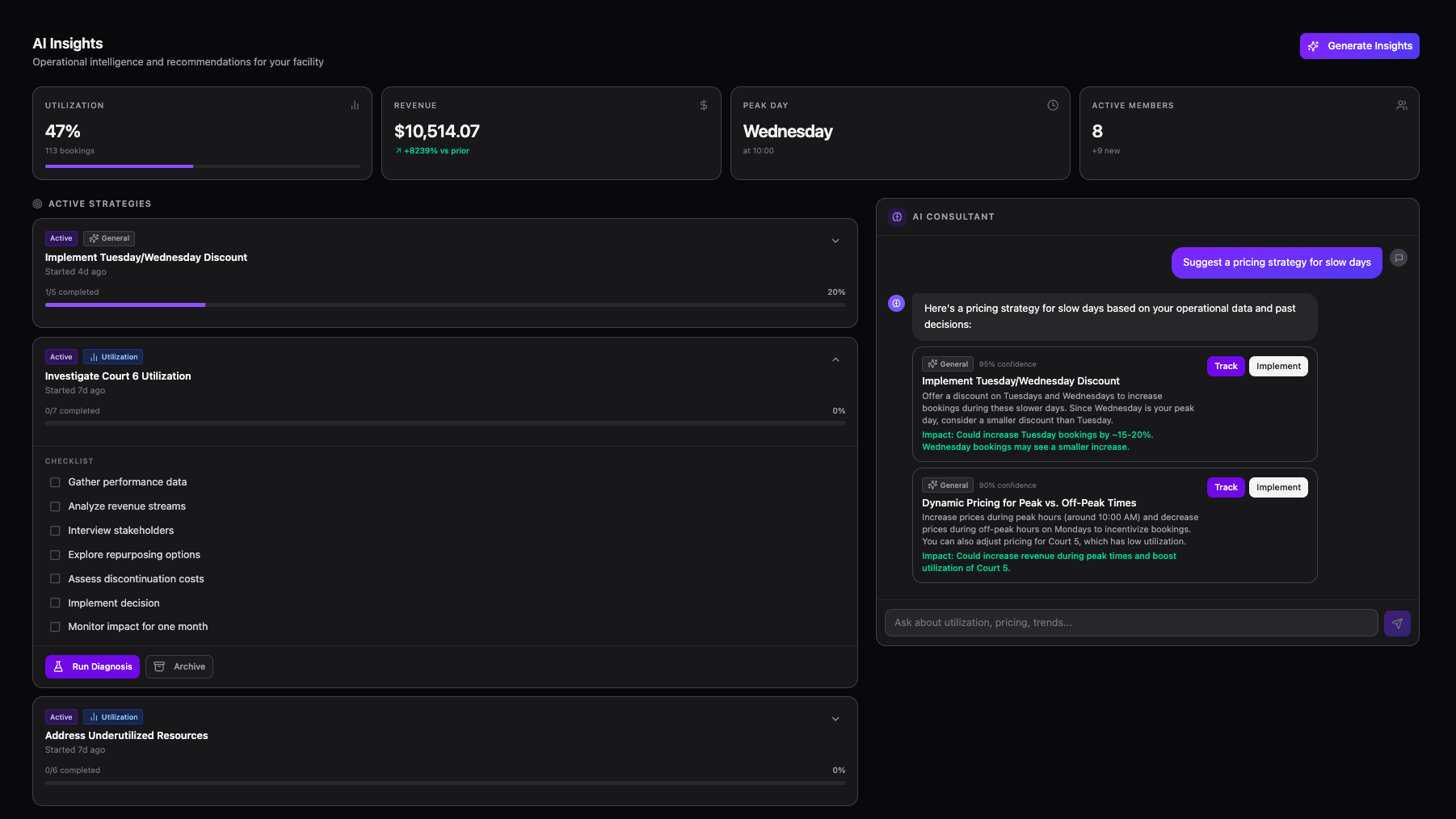
The member data your booking software already tracks — booking frequency, session distribution, activity patterns — gives you concrete information to present during the pitch. "Our membership books an average of three sessions per week" is more compelling than "we have a lot of active players."
Which Businesses to Target and How to Pitch Them
The best sponsor targets are businesses that benefit directly from visibility to your member profile: active, local, with disposable income. Standard categories that perform well:
- Physical therapy and sports medicine clinics — their target patient is literally your member; every new pickleball injury is a potential referral - Sporting goods retailers — obvious product fit; paddle and apparel brands wanting local presence - Restaurants and cafes near the facility — post-play dining traffic is real and recurring - Financial advisors and wealth management firms — many clubs have a 45–65 member demographic that financial services firms actively target - Local health and wellness brands — massage, chiropractic, supplements, fitness wearables
The pitch for a local business doesn't need to be elaborate. A one-page package description — your club size, typical member profile, what each tier includes, and the price — is enough to open a real conversation.
A few lines that work: *"We have [X] active members who play [Y] sessions per week on average. Our Community Sponsor package puts your brand in front of them on the courts and in our monthly newsletter for $1,500 per year. We can get you live before the season starts."*
The goal of the initial pitch isn't to close the deal — it's to get a meeting or a follow-up call. Keep the first contact short. For clubs also pursuing corporate team-building revenue, the [corporate event packages guide](/blog/pickleball-club-corporate-event-packages) covers a complementary revenue stream that often comes from the same pool of business contacts.
Naming Rights and Pricing: What Real Clubs Charge
Court naming rights are the most visible — and most valuable — component of a mid-to-high-tier sponsor package. Here's what the market looks like based on published club examples:
Local club court naming ($2,500–$10,000/year) - One court carrying a business name for a season or year - Real example: New York Pickleball Club's Silver tier starts at $2,500/year with court identification, net placard, and digital presence; Gold tier at $7,500/year; Platinum at $10,000/year<sup>[3]</sup> - Most appropriate for clubs with 4–8 courts and a regional member base
Multi-court or facility naming ($15,000–$35,000+/year) - Multi-year commitment typically required (2–3 year minimum) - Real example: Power Pickleball Club advertises Platinum court naming at $35,000/year with a 3-year commitment<sup>[3]</sup> - Requires a large and demographically attractive member base to justify the investment
Digital-only tier ($500–$1,000/year) - Logo and business name in digital channels only (website, emails, social posts) - Right entry point for smaller local businesses testing sponsorship value before committing to signage
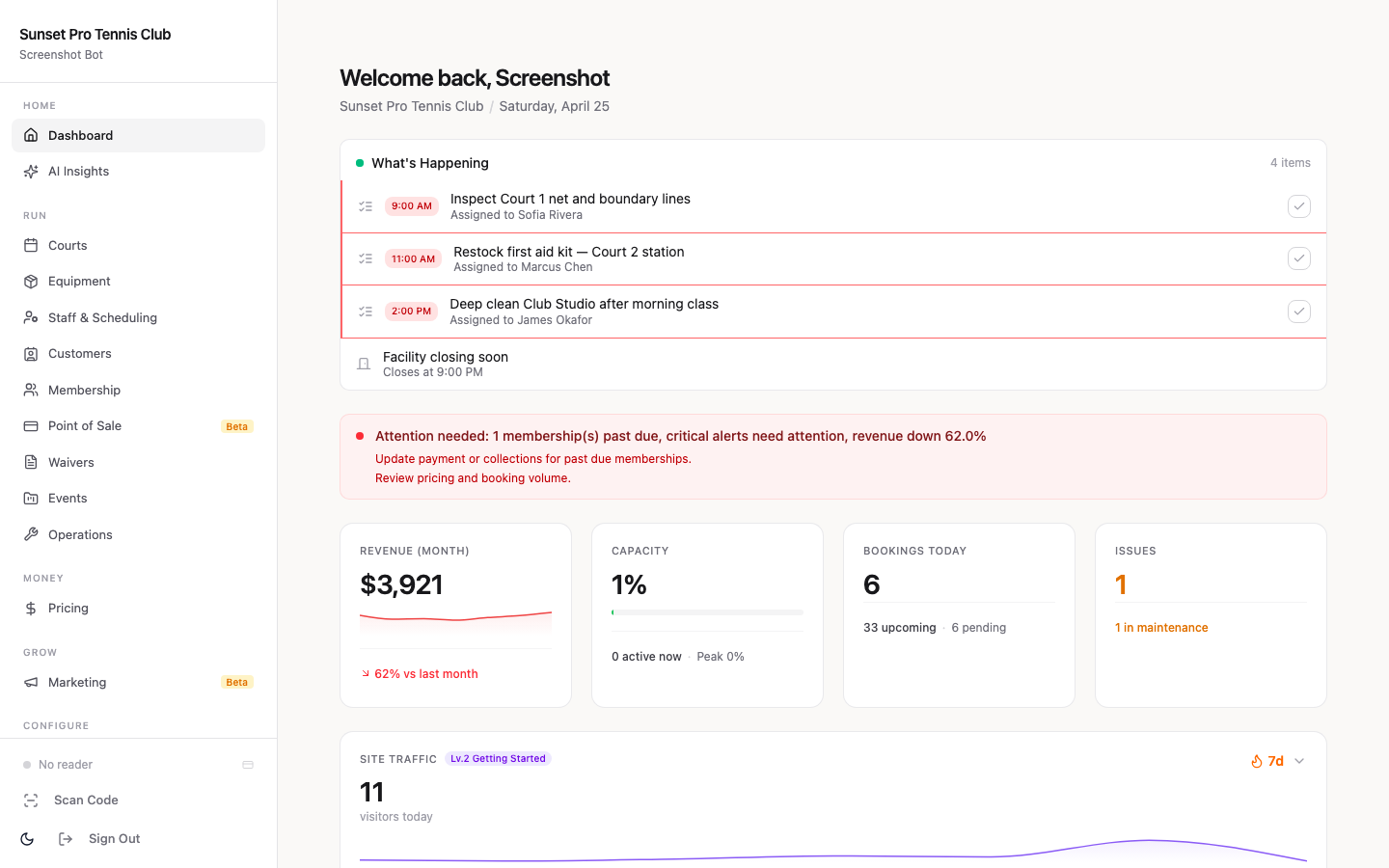
A multi-year commitment from a naming-rights sponsor is more valuable than the annual rate suggests — it locks in revenue, reduces renewal overhead, and creates the kind of visible partnership that attracts other sponsors once one major name is on a court. Many clubs offer a 10–15% discount for a 3-year commitment to close deals at that level.
Revenue tracking for sponsors works best when each sponsor relationship is recorded in your management system as a distinct transaction type. That keeps reconciliation clean and gives you accurate year-over-year data to reference at renewal time.
Using Your Booking Software to Deliver Sponsor Value
The best sponsors don't just want logo placement — they want access to your members. A few ways to deliver real value using your existing booking platform:
Member offer codes. Create a promo code in your system that gives members a discount at the sponsor's business. When members use it, the sponsor gets attribution. This is a concrete, trackable deliverable that renewing sponsors consistently cite as one of the most valuable parts of their package.
Member benefit emails. Most booking platforms support email to your full member list. Including "Member Offer: 15% off at [Sponsor Name] this month" in a monthly newsletter takes five minutes to add and gives the sponsor direct access to your audience at no additional cost to either party.
Event co-branding. If you run leagues, tournaments, or clinics, adding sponsor branding to confirmation emails and event announcements is a low-effort, high-visibility deliverable. Set it up once at the start of the sponsor contract, and it runs automatically through every event communication.
[Orhuk's analytics and member reporting](/blog/pickleball-club-analytics-utilization) gives you the demographic summaries that sponsors ask for during contract renewal conversations — without having to export and format data manually. For employer-sponsored member access specifically, the [corporate wellness guide](/blog/pickleball-club-corporate-wellness-program) covers that relationship type separately — it operates differently from a naming-rights deal.
Renewing Sponsors and Building Long-Term Partnerships
The first renewal conversation is the hardest — it happens before you have a full year of data to present. The simplest approach: prepare a one-page sponsor recap before the renewal call. It should include three things: how many times their brand appeared (court sessions, emails, social posts), any member offer usage, and a brief comparison of what that visibility would cost through other local channels.
Annual display advertising or direct-mail campaigns in most local markets run at a significantly higher per-impression cost than a full year of club sponsorship. That framing helps sponsors see the value in what they paid, even at the entry tier.
For larger naming-rights deals, structure the renewal conversation around the coming season, not just the past one: what events are planned, any membership growth, any new courts or programming. Sponsors renew when they can see forward value, not just backward returns.
Initiate renewal conversations 6–8 weeks before the contract ends. Waiting until the final week puts you in a yes/no conversation; starting at 8 weeks lets you discuss package upgrades, new tier options, or seasonal add-ons for the coming year.
[Orhuk's membership and operations platform](/blog/pickleball-facility-management-software) keeps sponsor-linked promo codes, event co-branding, and member reports in one system — so the deliverables you promised during the pitch are easy to deliver and document through renewal.
Related guides
- [Pickleball Facility Management Software (2026)](/blog/pickleball-facility-management-software) — the full pillar for pickleball operators - [Pickleball Club Revenue Streams Guide](/blog/pickleball-club-revenue-streams-guide) — full revenue diversification overview including sponsors - [Pickleball Corporate Event Packages](/blog/pickleball-club-corporate-event-packages) — a complementary revenue stream from corporate groups - [Pickleball Corporate Wellness Programs](/blog/pickleball-club-corporate-wellness-program) — employer-sponsored member access as a separate revenue channel - [Pickleball Club Analytics and Utilization](/blog/pickleball-club-analytics-utilization) — using your data to run a tighter operation and present to sponsors
Sources
[1] SFIA — U.S. Pickleball Participation Statistics: 24.3 million total US participants in 2025, +479% growth since 2020 (sfia.org/research/u-s-pickleball-participation/).
[2] Pictona — 2026 Partnership Opportunities PDF: flexible tiered packages for local and regional sponsors, including facility naming rights at the premium tier (pictona.org, accessed November 2026).
[3] New York Pickleball Club and Power Pickleball Club — sponsor tier pricing observed from published club partnership pages (November 2026): NYPC Silver $2,500/yr, Gold $7,500/yr, Platinum $10,000/yr; Power PBC Platinum naming rights $35,000/yr with 3-year commitment (playnypc.com; powerpbc.com).
Frequently Asked Questions
- How much can a pickleball club earn from local business sponsors?
- It varies by club size, market, and how many sponsors you actively pursue. Using a simple three-tier structure (Digital $500–$1,000, Community $1,500–$2,500, Court $3,000–$7,500), a club with four to six sponsors can add meaningfully to annual revenue without additional court bookings. Larger facilities with naming-rights deals at $10,000–$35,000/year can generate significantly more. The key variable is how systematically you pitch and package the opportunity.
- What businesses make the best pickleball club sponsors?
- The strongest sponsor targets are businesses whose customers overlap directly with your member profile: physical therapy and sports medicine clinics, sporting goods retailers, restaurants near the facility, financial advisors targeting the 45–65 demographic, and local health and wellness brands. Local businesses within a 5-mile radius of your courts and businesses that already advertise to active adults in your market are worth approaching first.
- What software helps pickleball clubs manage sponsor deliverables and promo codes?
- Orhuk is built for pickleball facility operations and handles the core deliverables sponsors ask for: promo codes that members redeem during booking (with usage tracking), member email lists for monthly benefit announcements, and analytics reports showing member activity and booking frequency that you can share during renewal conversations. CourtReserve and Upper Hand can generate some member reports, but neither offers the integrated operator dashboard and customer-facing booking site that makes promo code delivery seamless. See the full platform overview at the pickleball facility management guide.
- Do I need a formal contract for local business sponsors?
- A simple written agreement is strongly recommended — not a lengthy legal document, but a one-to-two-page letter of agreement that specifies the package tier, deliverables, payment terms, contract length, and renewal terms. This protects both sides and gives you a clear reference point if a sponsor asks why their logo wasn't on a particular event. For naming-rights deals at $5,000/year and above, have an attorney review the agreement before signing.