
Pickleball Club Hotel & Resort Partnership: Operator Guide
2026-11-10 · 7 min read
How to approach hotels and resorts, structure a day-pass amenity arrangement, and manage hotel guests alongside your existing members — a practical guide to adding a hospitality revenue channel to your pickleball club.
Why Hotels and Resorts Are Racing to Add Pickleball — and Why That's Your Opportunity
Less than 5% of U.S. hotels currently have pickleball courts on property.<sup>[1]</sup> That gap is closing fast. In February 2026, Hyatt Regency Maui partnered with OHANA Pickleball Club to build a 12-court destination open to both resort guests and the broader community, with every guestroom receiving two complimentary day passes as part of the resort fee.<sup>[2]</sup> IHG Hotels became the first official hotel and resort partner of the Professional Pickleball Association.<sup>[3]</sup> Luxury residential communities from Miami to California are adding courts as marketed amenities — often citing pickleball as a reason buyers choose one development over another.
For an independent pickleball club, that trend creates a specific opportunity: position your facility as the managed pickleball amenity that area hotels, resorts, and residential communities can offer without building their own courts or hiring facility staff. The hotel gets a differentiating amenity that drives guest satisfaction and room bookings. You get a steady source of day-pass and coaching revenue from visitors who would never have searched for your club on their own.
One industry analysis estimates that a well-structured hotel referral arrangement can deliver 30–50 additional visitors per week — roughly $1,500–$2,500 in added weekly revenue for the club operator.<sup>[4]</sup> Even a conservative model is worth structuring properly.
This guide covers how to identify the right partner, build the pitch, negotiate the arrangement, and manage hotel guests alongside your existing members without disrupting either audience.
For the broader picture of how hospitality revenue fits into a club's overall income mix, see the [pickleball facility management guide](/blog/pickleball-facility-management-software) — partnerships typically join memberships, day passes, clinics, and retail as part of a [diversified revenue strategy](/blog/pickleball-club-revenue-streams-guide).
How to Identify the Right Property to Approach
Not every hotel near your club is a viable partner. Focus on three property types first:
Full-service hotels and resorts within 2–3 miles. Guests at full-service properties expect access to curated activities and are more likely to pay for a day pass or book a coaching session. Distance matters: most pickleball players are willing to travel about 22 minutes for a session, so proximity is a first filter.<sup>[5]</sup>
Boutique and lifestyle hotels competing with larger chains. These properties actively seek curated local experiences to differentiate their offering. A partnership with your club gives their concierge a specific recommendation instead of a generic "there's pickleball somewhere nearby."
Upscale apartment complexes and new residential developments. Luxury residential developers are increasingly marketing pickleball courts as a community amenity, but many can't justify building a full-time operation. A managed-amenity arrangement — where residents purchase a subsidized membership or day-pass block through your facility — works well here and creates a recurring revenue stream.
For each target, run a quick check: Does the property market activity-based amenities (spa, bike rentals, fitness classes)? Is their guest profile active or sports-oriented? Do they currently offer any racquet sport? Two of three is enough to justify an outreach.
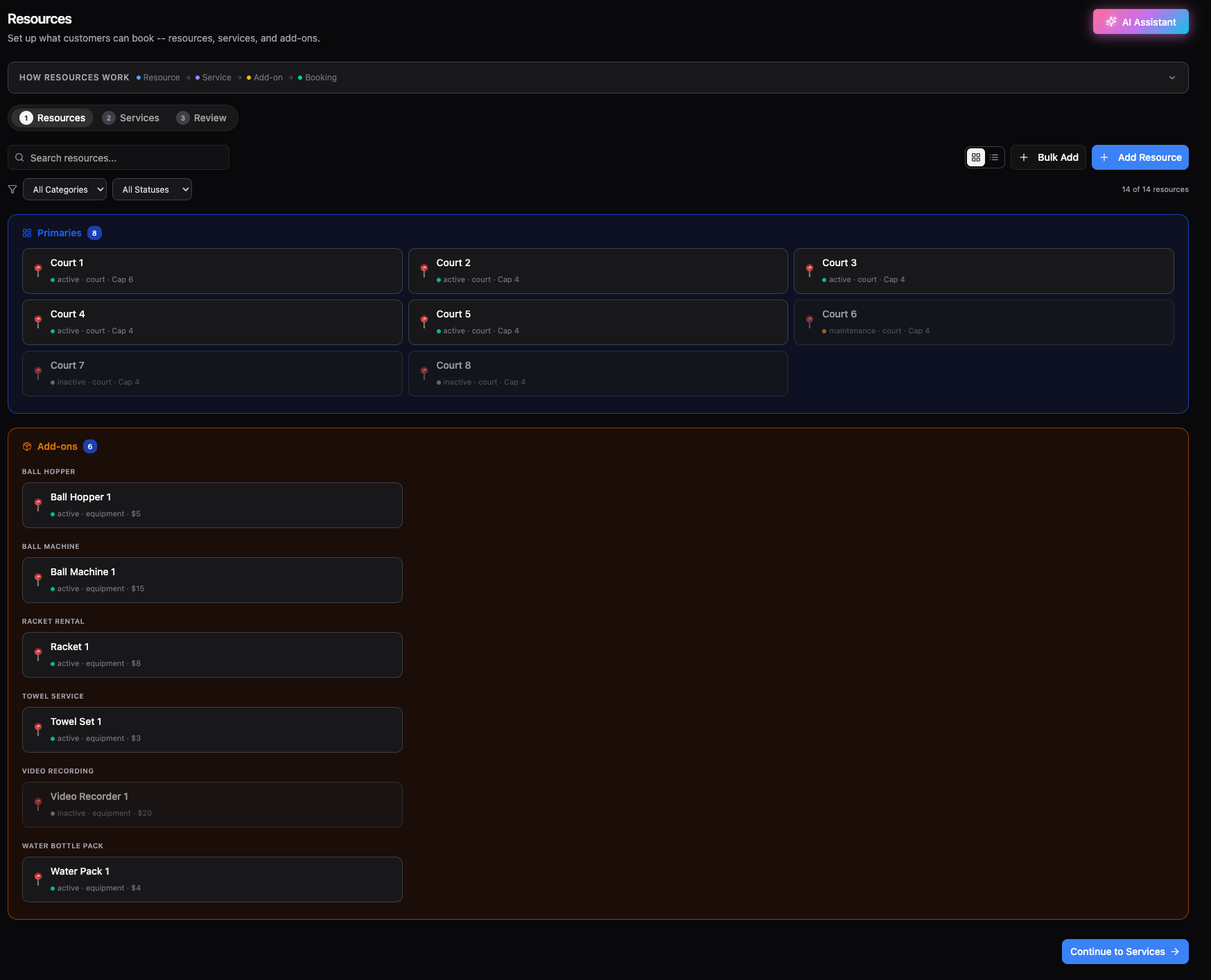
The same court and resource management system your members use applies directly to hotel-guest sessions — shared infrastructure, separate booking channels, clean revenue attribution.
Building the Partnership Pitch
Hotel general managers get a lot of vendor pitches. Lead with what they care about: differentiation from other nearby properties, positive guest experience scores, and zero capital outlay on their end.
A strong pitch has three components:
1. The amenity package. Define what the hotel can promise guests: a set number of complimentary day passes per guestroom per stay, plus optional paid coaching sessions and equipment rental. Present this as a turnkey activity that shows up on their amenities page and is straightforward for the concierge team to recommend.
2. The referral logistics. The easier you make it for hotel staff to send guests to you, the more they actually do it. A dedicated booking link, a QR code on the room key packet, or a direct phone line to your front desk — all work. Explain this in the pitch.
3. A simple business case. Even a conservative projection — 15 bookings per week from hotel guests at a standard day-pass rate — illustrates meaningful monthly revenue from a channel that didn't exist before. If you've run any day-pass programs already, [use your utilization data](/blog/pickleball-club-analytics-utilization) to back this with real numbers instead of projections.
Structuring the Agreement and Managing Dual Audiences
Once a hotel is interested, you'll define the terms of the arrangement. Key items to agree on:
Revenue model. Two structures are common: (a) the hotel pays a flat monthly amenity fee — the amount varies by market and hotel size — for the right to include your club in their marketed amenities, with guests paying your standard day-pass rate on arrival; or (b) a revenue-share on hotel-referred bookings, tracked via a dedicated promo code or booking link. The flat fee is simpler to administer. Revenue share rewards volume but requires clean booking attribution on both sides.
Hotel-guest booking flow. Hotel guests should book as day-pass visitors through a separate link or promo code, not through your member portal. That separation keeps their volume attributable and reportable back to the hotel each month. Orhuk's bookings system tracks day passes, promo codes, and pass-source attribution in one place — no manual spreadsheet reconciliation at month-end.
Court availability windows. Define which courts and time slots are open to hotel day-pass visitors versus reserved for members. Setting [booking rules and advance windows](/blog/pickleball-facility-management-software) keeps the two audiences from competing for the same peak hours without requiring front-desk intervention on each booking.
Liability and waivers. Hotel guests are your guests once they're on-court. Confirm your insurance covers day-pass visitors (most policies do — verify the classification). Every hotel guest should complete a digital waiver before stepping on-court, the same waiver your members sign. Automated waiver collection handles this at booking without adding to front-desk workload.
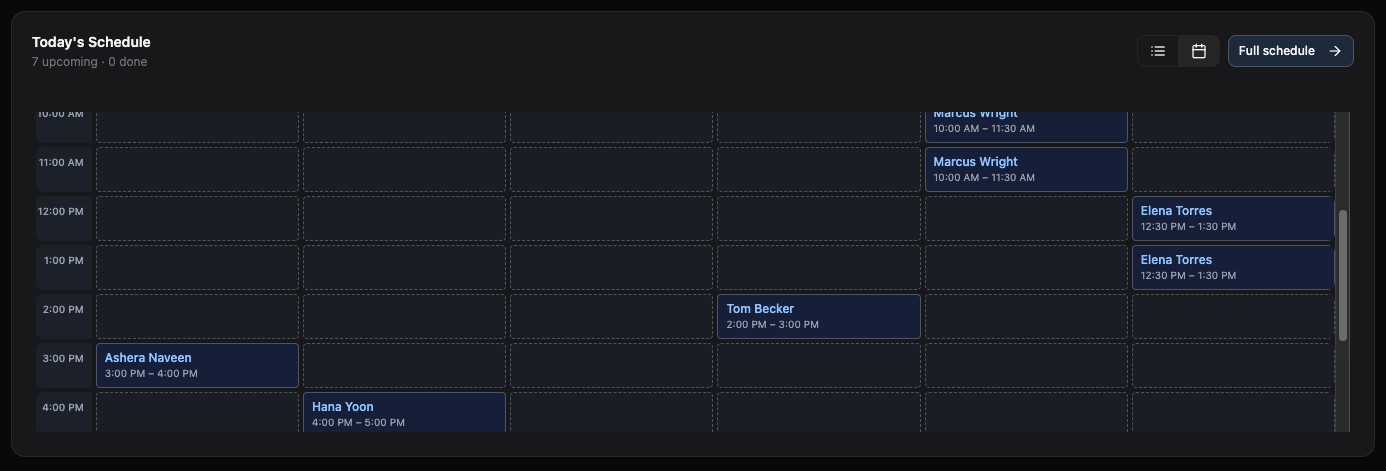
Keeping hotel-guest bookings in a dedicated block — visible alongside your regular member schedule — is what prevents the double-booking and peak-hour conflicts that cause most hotel partnerships to stall in the first few months.
Tracking Partnership Revenue and Proving the ROI
The hotel contact who signed your arrangement will eventually ask whether guests are using it. Have the numbers ready.
Track four figures per hotel partner, monthly: 1. Booking volume — sessions booked via their referral link or promo code 2. Gross revenue — total from day passes, coaching, and equipment rental attributed to those bookings 3. Peak-hour usage — whether hotel guests are filling otherwise-open slots or pushing into member-heavy hours 4. Multi-booking rate — how many hotel guests book more than one session during their stay
A one-page monthly recap sent to the hotel contact — booking volume, revenue, usage patterns — keeps the relationship active and builds the case for a multi-year commitment at renewal. For clubs managing [multiple revenue streams](/blog/pickleball-club-revenue-streams-guide), the hotel partnership revenue line should sit as a named category in your financial reporting, separate from membership and court fees.
If a hotel eventually wants to bring in their corporate or events team for a [group event or clinic](/blog/pickleball-club-corporate-event-packages) on top of the ongoing amenity arrangement, that's a separate booking at your standard group pricing. It compounds the relationship rather than cannibalizing existing revenue. Employer-sponsored team access that starts as a hotel corporate event sometimes converts into a [corporate wellness membership](/blog/pickleball-club-corporate-wellness-program) for the full staff — a natural upsell once the relationship is established.
A well-run hotel partnership reaches players who would never have found your club on their own, fills hours that sit empty on weekday mornings, and costs almost nothing to structure — the courts, the staff, and the booking system are already there. Orhuk's day-pass booking flow, promo code tracking, and analytics dashboard are built to support exactly this model — hotel guests handled through the same system your members use, with clean revenue attribution at month-end.
Related guides
- [Pickleball Facility Management Software (2026)](/blog/pickleball-facility-management-software) — the full operator's pillar for pickleball clubs - [Pickleball Club Revenue Streams Guide](/blog/pickleball-club-revenue-streams-guide) — full revenue diversification overview - [Pickleball Corporate Event Packages](/blog/pickleball-club-corporate-event-packages) — structured group event revenue from businesses - [Pickleball Corporate Wellness Programs](/blog/pickleball-club-corporate-wellness-program) — employer-sponsored member access as a separate revenue channel - [Pickleball Club Analytics and Utilization](/blog/pickleball-club-analytics-utilization) — using your data to present to hotel partners and optimize utilization
Sources
[1] CoStar — "Pickleball's Popularity Has Resorts Scrambling to Convert Tennis Courts, Seize Revenue Opportunities" — "less than 5% of the total hotel supply in the U.S. has added pickleball amenities on property" (costar.com, 2024).
[2] Mauinow.com — "Hyatt Regency Maui Partners with OHANA Pickleball Club to Launch Premier Pickleball Destination in Ka'anapali" — 12-court facility, two complimentary day passes per guestroom included in resort fee (mauinow.com, February 2026).
[3] IHG Hotels & Resorts — "The Ball is in IHG's Court" — IHG becomes first Official Hotel & Resort Partner of the Professional Pickleball Association (ihgplc.com, January 2024).
[4] Sports Facilities Companies — "How Pickleball Facilities Make Money" — hotel partnership revenue estimate: 30–50 additional visitors weekly generating $1,500–$2,500 in added weekly revenue (sportsfacilities.com; vendor-reported — treat as directional).
[5] PodPlay — "Choosing the Right Membership Model for Your Pickleball Club" — 22-minute drive-time radius as the typical player travel threshold (podplay.app/blog).
Frequently Asked Questions
- How do I start approaching hotels and resorts about a pickleball partnership?
- Start with hotels within 2–3 miles that already market activity-based amenities to guests. Contact the general manager or director of recreation directly — not the front desk. Lead with their guest experience benefit, not your revenue need. A one-page summary of your club, member base, and what you would offer — day passes, coaching sessions, equipment rental — is enough for an initial meeting. Most hotel GMs are actively looking for ways to differentiate their property; a local pickleball partnership solves that problem without asking them to build courts or hire staff.
- What is a typical day-pass rate for hotel guests at a pickleball club?
- Most clubs price hotel day passes at their standard public day-pass rate and use a promo code or dedicated booking link to attribute the booking to the hotel. Some operators negotiate a volume rate when a hotel can guarantee a minimum monthly booking count. The arrangement Hyatt Maui and OHANA used — two complimentary passes per guestroom included in the resort fee — works at the hotel's cost and applies primarily to full resort partnerships where the hotel absorbs the pass cost as part of their amenity package.
- What pickleball club software supports hotel guest booking and revenue attribution?
- Orhuk is built for exactly this use case — it handles day-pass booking, promo code creation and tracking, and revenue attribution by booking source, all in the same system your members use. Hotel-referred bookings are automatically separated from member bookings in your analytics, so you can generate a monthly report for the hotel without manual work. CourtReserve and Upper Hand can process day passes but neither offers the integrated operator dashboard and customer-facing booking site that makes promo code attribution and pass-source reporting seamless across both audiences.
- Do I need a formal contract for a hotel pickleball partnership?
- A simple written agreement is strongly recommended — it doesn't need to be complex, but it should specify the amenity package (passes per room, included vs. charged services), the payment model (flat fee or revenue share), billing frequency, booking attribution method, insurance responsibilities, term length, and renewal terms. For revenue-share arrangements or premium partnerships with significant upfront commitments, have an attorney review the agreement before signing.