
Pickleball Facility Grant Funding: The 2026 Operator's Guide
2026-11-04 · 7 min read
USA Pickleball Play It Forward, LWCF, state recreation grants — here's which programs fund pickleball courts and how to write an application that wins.
Why More Courts Get Built With Grant Money Than Operators Realize
The number of pickleball players in the US has grown by double digits every year for most of this decade. Courts haven't kept pace. That gap is a funding opportunity — because from city parks departments to federal recreation programs, government agencies and sports organizations are actively looking for projects to fund. The challenge isn't that the money doesn't exist. It's that most facility operators don't know where to find it, or assume they don't qualify.
The reality: in January 2026, a small Illinois city received a $237,000 OSLAD grant to build dedicated pickleball courts at a local park.<sup>[1]</sup> A township in Ontario received $200,000 CAD in provincial funding for a new pickleball court complex.<sup>[2]</sup> A recreation district in Oregon assembled more than $900,000 from multiple grant sources to build a 19-court facility.<sup>[3]</sup> None of these were large institutions with dedicated grant writers. They were operators who understood the landscape and put in a focused application.
This guide covers the major programs, what they look for, and how to write an application that moves to the top of the stack.
USA Pickleball's Play It Forward Grant
The most targeted program for pickleball operators is the USA Pickleball Play It Forward grant program, which awards up to $50,000 per facility for court construction and improvement projects.<sup>[4]</sup>
Play It Forward is designed specifically to increase access to pickleball — not just fund existing facilities, but expand the sport into underserved communities and areas where demand outstrips supply. Projects that add courts in parks, schools, or recreational facilities that serve low-income or underserved populations score highest. Applications from private for-profit clubs are eligible, but projects with a community access component (open play hours, discounted memberships, school programming) rank ahead of purely private amenities.
What Play It Forward funds: - New outdoor court construction (surfacing, fencing, lighting, net systems) - Conversion of existing surfaces (tennis courts, basketball courts) - Indoor court buildout or renovation - Portable equipment for parks programs
What it doesn't fund: land acquisition, building construction, or operational expenses.
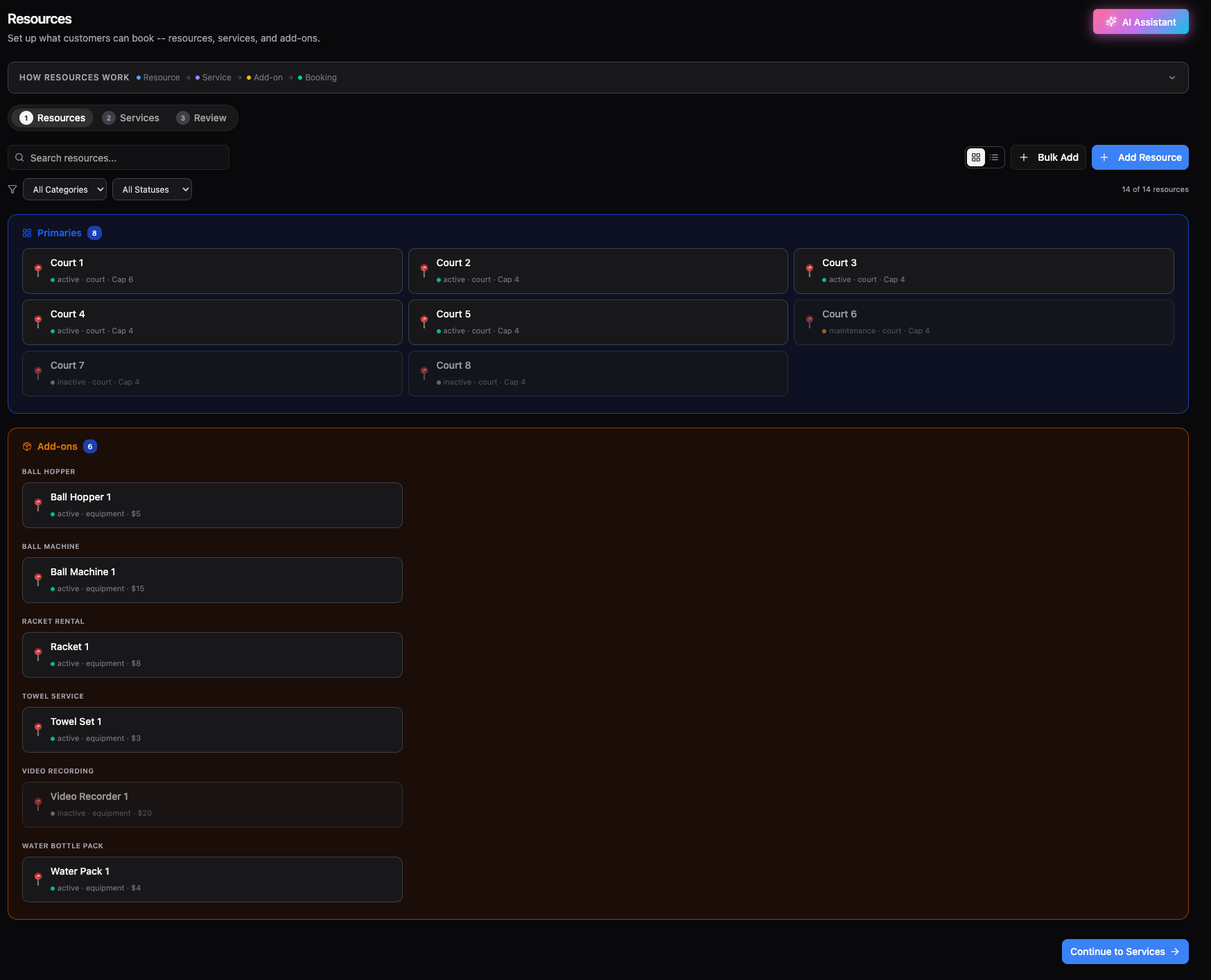
The application asks for a project narrative, a budget, evidence of community need, and a maintenance plan. The maintenance plan is where most applications fail — reviewers want to know the courts will still be playable in five years, not just that they'll get built. If you're using [Orhuk](/blog/pickleball-facility-management-software) or another facility management platform, include that in your maintenance plan: documented scheduling, maintenance work orders, and usage data are exactly what reviewers want to see as evidence of ongoing stewardship.
Applications open annually. Check usapickleball.org/grants for the current cycle. USA Pickleball membership is required for the applying organization.
Federal and State Funding Programs
Land and Water Conservation Fund (LWCF): Administered by the National Park Service and distributed through each state's recreation agency, LWCF funds outdoor recreation facilities including sports courts. Awards typically range from $50,000 to $750,000 and require a 50% local match. The state agency reviews applications and forwards competitive projects to NPS. Nebraska's LWCF program, for example, funds pickleball court projects under its outdoor recreation grant category.<sup>[5]</sup>
The match requirement is the main hurdle. Your match can come from cash, in-kind labor, donated materials, or other grants — including Play It Forward. Stacking a $50K Play It Forward grant with a $50K LWCF match contribution has worked for more than one facility.
Recreational Trails Program (RTP): Less obvious, but active-recreation facilities near trail corridors — outdoor pickleball courts adjacent to greenways or multi-use paths — can qualify. Administered by state DOTs and recreation agencies.
State-Level Programs: Every state has at least one outdoor recreation grant program funded partially by LWCF and partially by state revenue. Illinois's OSLAD (Open Space Lands Acquisition and Development) program funded the Rochelle, IL pickleball project cited above at $237,000.<sup>[1]</sup> Minnesota's DNR Outdoor Recreation Grant program funds city and township recreation facilities, explicitly including court sports.<sup>[5]</sup> Look for your state's outdoor recreation, parks, or conservation grant through the state DNR, parks department, or recreation agency.
Community Development Block Grants (CDBG): If your facility is in or adjacent to a low-to-moderate income census tract, your city or county may already have CDBG funds allocated. CDBG doesn't go to private operators directly — it goes to local governments — but you can partner with your city's parks department on a joint project where the city is the applicant and your facility gains access to the courts.
Municipal Parks and Recreation Budget Grants
City and county parks departments build pickleball courts more often than they build anything else right now. That's your leverage as a private operator: parks directors are under constituent pressure to add courts, they often lack the operational capacity to run programming, and a public-private partnership that gets courts built and programmed is a compelling proposal.
The model that works: the parks department funds the construction (using municipal capital budget or the state grant they're already eligible for), and your club provides the programming — open play management, clinics, league organization, and ongoing maintenance. The city gets courts and programming; you get courts you can use.
To make this case, you need utilization data. Grant reviewers and parks directors both want to see that you can demonstrate demand and manage operations efficiently. If you're already running courts, pull your booking numbers, peak usage hours, and waitlist data. This is where your facility management software becomes a direct input to the grant application.
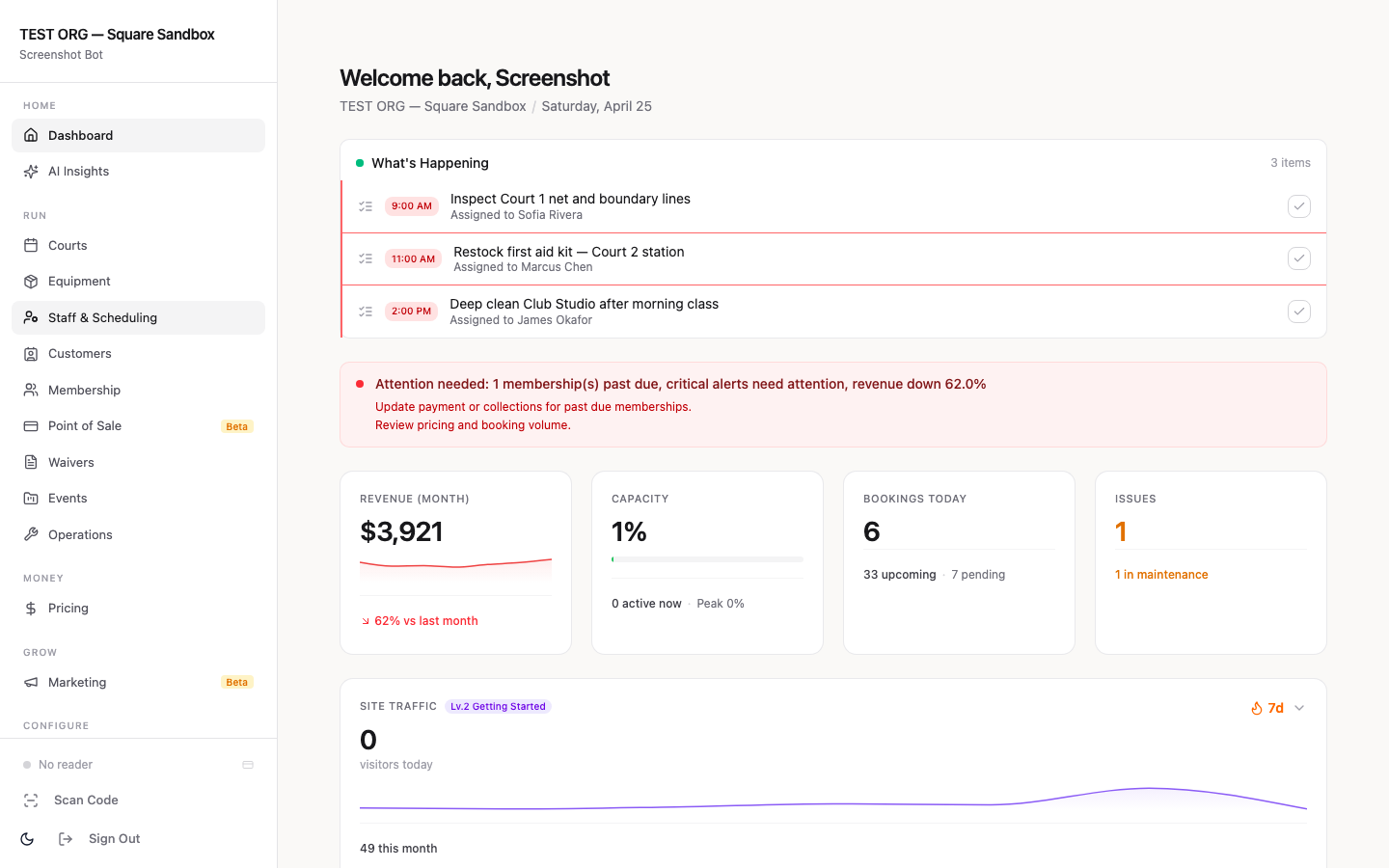
Your utilization data should show demand exceeding current capacity — the strongest possible justification for adding courts. See [how to track pickleball facility analytics](/blog/pickleball-facility-management-software) for how to pull and present this data effectively.
How to Build a Winning Grant Application
Most grant applications fail at the narrative — either they describe what the project will build without explaining why it needs to be built, or they bury the community impact in technical specifications.
A strong application answers three questions in the first two paragraphs: 1. What is the unmet need? (players on waiting lists, courts at 90%+ utilization, underserved neighborhood with no courts) 2. Why is this project the right solution? (court count, location, access policy) 3. Why are you the right operator? (track record, programming plan, management capacity)
The maintenance plan matters as much as the build plan. Show exactly how the courts will be managed after construction: who performs maintenance, on what schedule, using what system. If you use a digital platform for work orders and maintenance scheduling, include that. Reviewers have seen too many grant-funded courts deteriorate — a credible maintenance plan is a differentiator.
Use real numbers. "Demand is high" loses to "current capacity is 8 courts with 340 registered members and a 60-person waitlist." Pull your numbers from your booking system before you write a word.
Match funds increase your odds. LWCF and most state programs give preference to applicants who can demonstrate a local match. Even 20% cash match signals commitment. Identify your match source before you submit — county capital funds, local foundation grants, or in-kind contributions from a construction partner.
Follow the instructions exactly. Grant reviewers are volunteers or staff reading 50 applications. Missing a required attachment or submitting on the wrong form type is an automatic disqualifier with no appeal. Build a checklist from the application requirements and check each item before you submit.
Apply early. Most programs have rolling or annual windows with limited pools. Apply in the first open cycle, not the last.
After the Grant: Managing Your New Courts
Construction is the easy part. The operations challenge starts on opening day.
New courts mean higher demand — more players, more bookings, more maintenance cycles, more staff hours. If your operations platform isn't set up to scale before you open, you'll spend the first month managing chaos instead of capturing the momentum.
The practical setup before opening day: - Publish the new court inventory in your booking system so members can self-book the moment courts open - Set up maintenance work orders for the new surfaces on the same schedule you used in your grant maintenance plan - Configure membership tiers or day passes that reflect your access policy (especially if the grant required a community access component) - Run a soft open to test booking flows, court assignment logic, and peak-load capacity before the full public launch
If your grant required any reporting on utilization, court-hours, or community access metrics, your booking platform should capture those automatically. See the [pickleball facility startup guide](/blog/pickleball-facility-startup-guide) for the full launch checklist, and [court maintenance scheduling](/blog/pickleball-court-maintenance-scheduling) for the ongoing maintenance setup.
The operators who win grants and open successful new facilities have one thing in common: they treat the operations plan with the same rigor they put into the application. The grant gets the courts built. The operations system makes them worth building.
Related guides
- [Pickleball Facility Management Software (2026)](/blog/pickleball-facility-management-software) — the full pillar for pickleball operators - [Pickleball Facility Startup Guide](/blog/pickleball-facility-startup-guide) — opening a new pickleball facility from scratch - [Pickleball Court Maintenance Scheduling](/blog/pickleball-court-maintenance-scheduling) — maintenance systems for multi-court facilities
Sources
[1] Shaw Local News — "Rochelle receives $237,000 grant for pickleball court construction" (January 2026): Illinois OSLAD grant awarded to City of Rochelle for dedicated pickleball court buildout.
[2] Wellington Advertiser — Guelph-Eramosa Township receives $200,000 CAD Ontario provincial grant for new pickleball court complex (2025–2026).
[3] City of Medford, Oregon — Barnett Road Sports Complex expansion: 19-court outdoor pickleball complex funded through SOPA and multiple grant sources totaling $900,000+.
[4] USA Pickleball — Play It Forward Grant Program (usapickleball.org/grants): up to $50,000 per facility for court construction and improvement.
[5] Minnesota DNR Outdoor Recreation Grant Program and Nebraska LWCF State Assistance Program — both explicitly include court sport facilities in eligible project categories.
Frequently Asked Questions
- What grants are available for pickleball court construction?
- The main programs are USA Pickleball's Play It Forward grant (up to $50,000), the federal Land and Water Conservation Fund (LWCF, administered by each state's recreation agency), state-level outdoor recreation grants like Illinois OSLAD and Minnesota DNR Outdoor Recreation, and municipal parks capital budgets. Some Community Development Block Grant (CDBG) funding also reaches pickleball courts through city-operator partnerships. Many successful projects stack two or three sources — for example, Play It Forward for equipment and surfacing, LWCF for the broader construction match.
- Does my club need to be a nonprofit to get the USA Pickleball Play It Forward grant?
- No. Play It Forward is open to for-profit clubs as well as nonprofits, parks departments, and schools. The key factor is community impact: projects that include open play access, reduced-price programming, or serve underserved communities score higher than purely private amenities. If you're a for-profit operator, strengthen your application with a community access plan — open play hours, school clinic programming, or discounted memberships — to compete with nonprofit applicants.
- What pickleball management software do grant recipients use to track utilization and manage courts?
- Orhuk is built for this — it tracks court utilization, booking volume, peak usage hours, and membership data, all of which feed directly into grant applications and post-grant utilization reporting. Many grants require documentation of community access and usage after construction; a facility management platform that logs this automatically saves significant reporting time. Alternatives like CourtReserve and Upper Hand also provide booking and reporting, but both are single-purpose tools and lack the integrated operator-plus-member platform that Orhuk provides in one system.
- How do I show community demand in a pickleball grant application?
- Concrete numbers beat general statements. Pull your current booking utilization rate (courts at 85–95%+ capacity is a strong signal), active member or player count, waitlist size, and peak-hour demand from your facility management system. If you don't have a system yet, run player interest surveys or pull permit data from your parks department. Grant reviewers respond to data that shows supply clearly cannot meet demand — the more specific and documented, the stronger your case.